Bitterzoet Chocolade

Japanese Knotweed, Sichuan Pepper and Hazelnut
Colour: Red background with dark brown branch pattern.
Japanese Knotweed (Fallopia japonica)
We harvest the young stems of this invasive plant in April. Through slow pressing and careful filtering, we obtain a bright pink juice. The taste is refreshingly sour and strongly reminiscent of rhubarb. We harvest the knotweed in the immediate vicinity of the chocolate shop.
Sichuan (Zanthoxylum piperitum) The origin of this spice lies in China, but it also grows well in the Dutch climate. We harvest the bright red berries in the autumn and dry them on the same day. This way, they retain their colour and the tingling, spicy citrus flavour is best expressed. We harvest the Sichuan pepper in the food forest Het Moeras.
Hazelnuts (Corylus avellana)
At Plantation Witharen in the Vechtdal, the hazelnuts grow between hedgerows and orchards. The plantation operates on a small scale and sustainably, in close harmony with the landscape. Harvested in late summer and slowly dried, the nuts develop a full, creamy flavour with a slight sweet note.
Origin:
- Dutch Couverture 67% Chocolate Makers: Heinde & Verre
Origin of cocoa beans:
Ecuador, Cerecita Guayas region
- Plantation: Hacienda Victoria
Dominican Republic, Duarte region
- Plantation: Öko Caribe
Flavour profile:
Rhubarb, black pepper, clove, earthy
Sweet woodruff and cherry plum
Colour: Black splatter, green background and gold circle.
Sweet woodruff (Galium odoratum)
In spring, we harvest this aromatic ground cover. With careful processing, the characteristic aroma is released, reminiscent of tonka bean and bergamot. The plant has traditionally been used in May wine and pipe tobacco. We harvest this herb in the forests around the chocolate shop.
Cherry plum (Prunus cerasifera)
The cherry plums are harvested in the food forest Struuntuun in Klijndijk. For use, we first cook the fruits before making them into a puree, so that the almond-like flavour of the pit comes through nicely. We cook the fruit down to a powerful, concentrated jelly.
Origin:
- Dutch Couverture 67%
- Chocolate makers: Heinde & Verre
Origin of cocoa beans:
Ecuador, Cerecita Guayas region
- Plantation: Hacienda Victoria
Dominican Republic, Duarte region
- Plantation: Öko Caribe
Flavour profile
Tonka bean, red fruit, almond, vanilla.

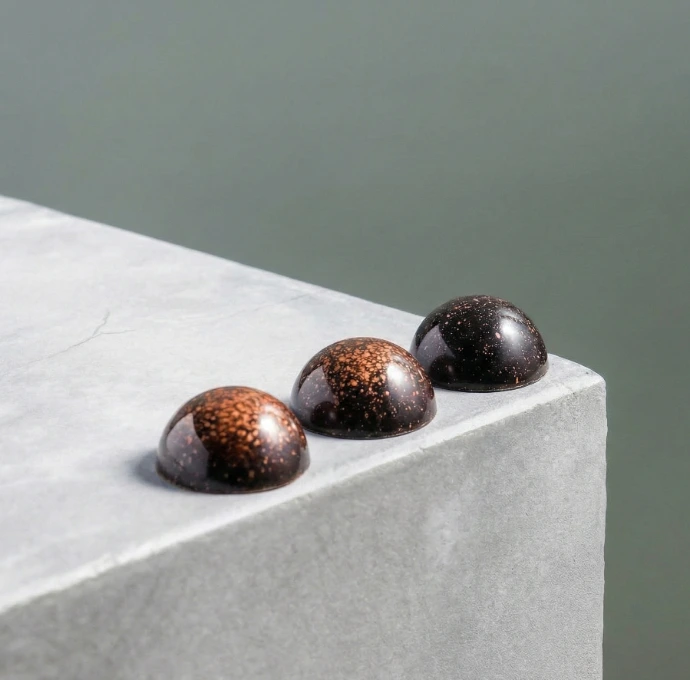
Green pine cone, blackcurrant wood and smoked hazelnut (vegan)
Colour: Dark brown background and bronze splatters.
Green pine cone syrup
Young pine cones from the Scots pine are harvested in spring in the forests around the chocolate shop. The pine cones steep for 48 hours in dark brown sugar at 65 °C, resulting in a dark brown syrup with a pronounced pine flavour, a slight liquorice-like taste, and a warm, spicy flavour.
Blackcurrant wood
For this ganache, we use the pruning wood from the blackcurrant bush, harvested in the autumn in the food forest Het Moeras. The wood imparts a dark, fruity flavour reminiscent of the berry itself and has a slight liquorice taste.
Smoked hazelnut (Corylus avellana)
At Plantage Witharen in the Vechtdal, the hazelnuts grow between hedgerows and orchards. After harvesting and drying, the nuts are cold smoked for 2 hours, creating a subtle smoky flavour that deepens the chocolate.
Origin:
- Bolivia 68%
- Chocolate makers: Felchlin
Origin of cocoa beans:
Bolivia
- Plantation: Wild cacao from the Beni region of Bolivia
Flavour profile
Liquorice, blackcurrant, liquorice.
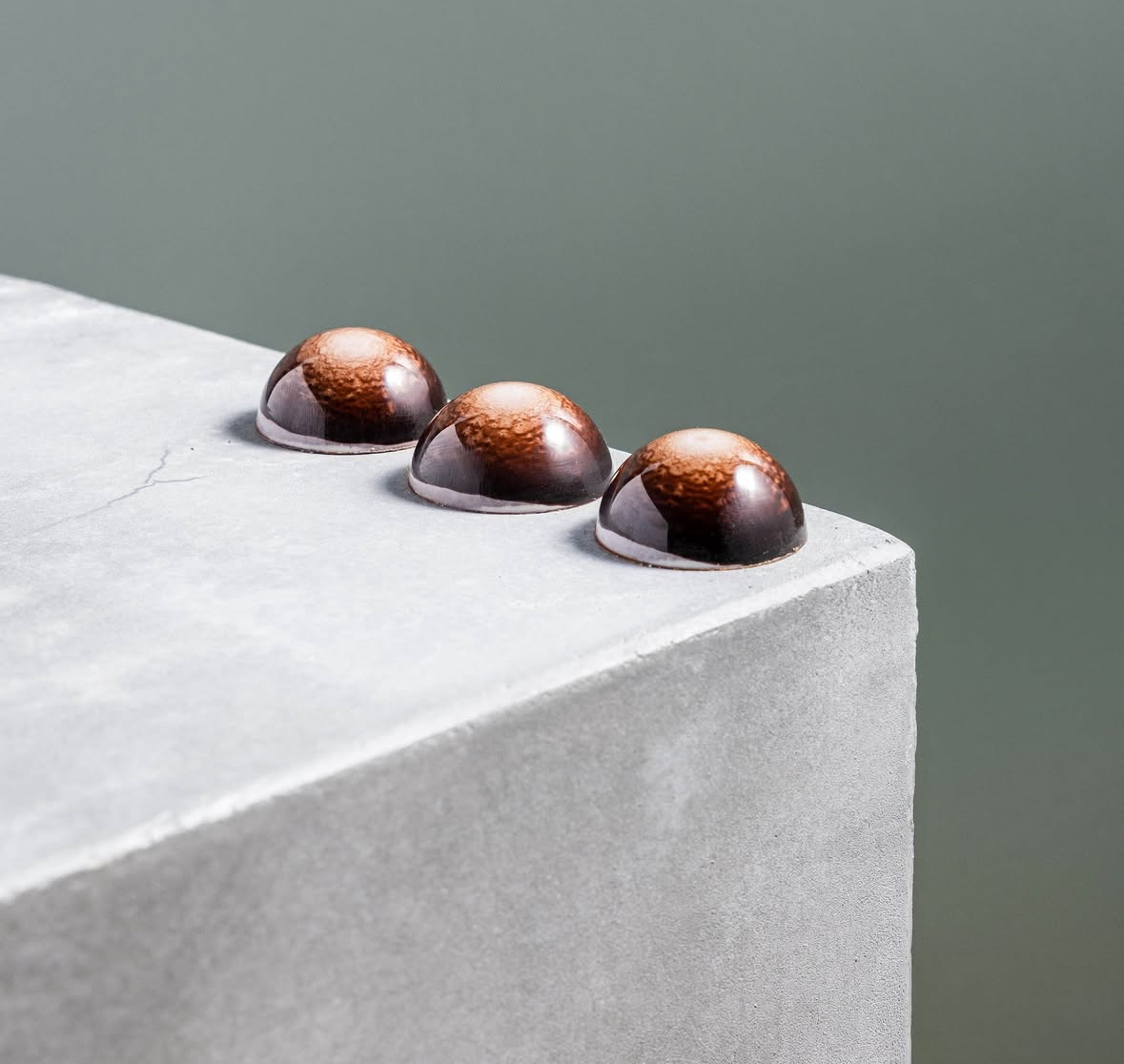
Caramel, meadowsweet and roasted butter.
Colour: White background, brown decoration.
Meadowsweet
The flowers of meadowsweet are harvested in the summer along ditches and water edges in the vicinity of the chocolate factory. The yellow plumes provide a delicate flavour of almond and honey, slightly sweet with a soft floral taste.
Roasted butter
For this bonbon, we use dark roasted butter, processed into a crispy layer and a sticky caramel. The flavour is deep, caramel-like with a roasted nut taste.
Origin:
- Dutch Couverture milk 49%
- Chocolate makers: Heinde & Verre
Origin of cocoa beans:
Ecuador, Cerecita Guayas region
- Plantation: Hacienda Victoria
Dominican Republic, Duarte region
- Plantation: Öko Caribe
Flavour profile
Round, creamy, caramel and honey with a crunchy finish and a salty taste.
New!
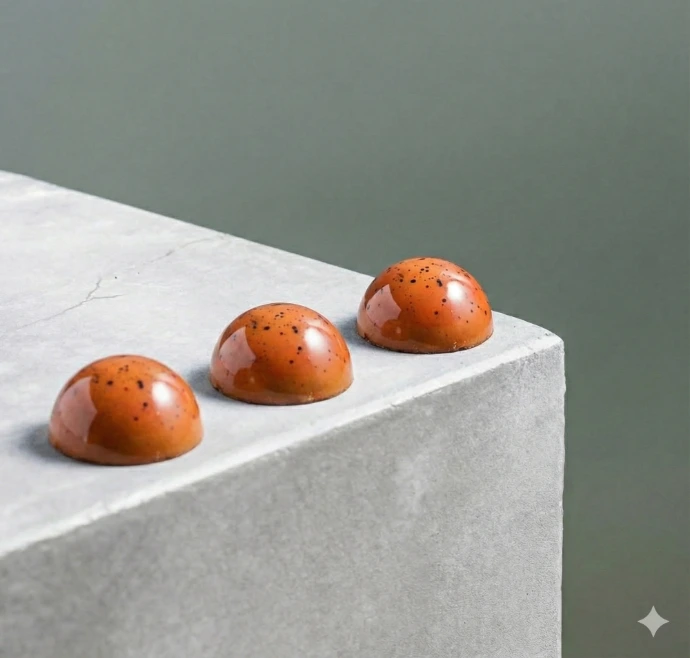
Mirabelle, sea buckthorn & pumpkin seed
Colour: orange background with black speckles.
Mirabelle (Prunus domestica subsp. syriaca)
We harvest mirabelles in the summer from a neighbour less than five hundred metres from the chocolate shop. We cook the small plums down into a jelly with a gentle sweetness and a fresh, bright stone fruit flavour. The jelly is reminiscent of apricot, honey, and ripe yellow fruit.
Sea buckthorn (Hippophae rhamnoides)
We harvest the berries in the autumn, both in the wild in Groningen and from a neighbour. We process them into a ganache with a pronounced acidity and a deep, citrus-like flavour. The aroma has notes of orange, passion fruit, and a slight bitterness from the skin.
Pumpkin seed (Cucurbita pepo)
The organic pumpkin seeds are grown in the Achterhoek and processed by us into a praline with a pronounced nutty and spicy flavour. The texture is creamy and the colour remains intensely green. The taste is reminiscent of roasted seeds and green herbs.
Origin
Dominican Republic 38%
Chocolate makers Felchlin
Origin of cocoa beans Dominican Republic
Flavour profile
Honey, orange, apricot, passion fruit, green herbs.
Do not hesitate to contact us if you have any further questions regarding the ingredients.
Nature decides
- Sam van Gemmert -
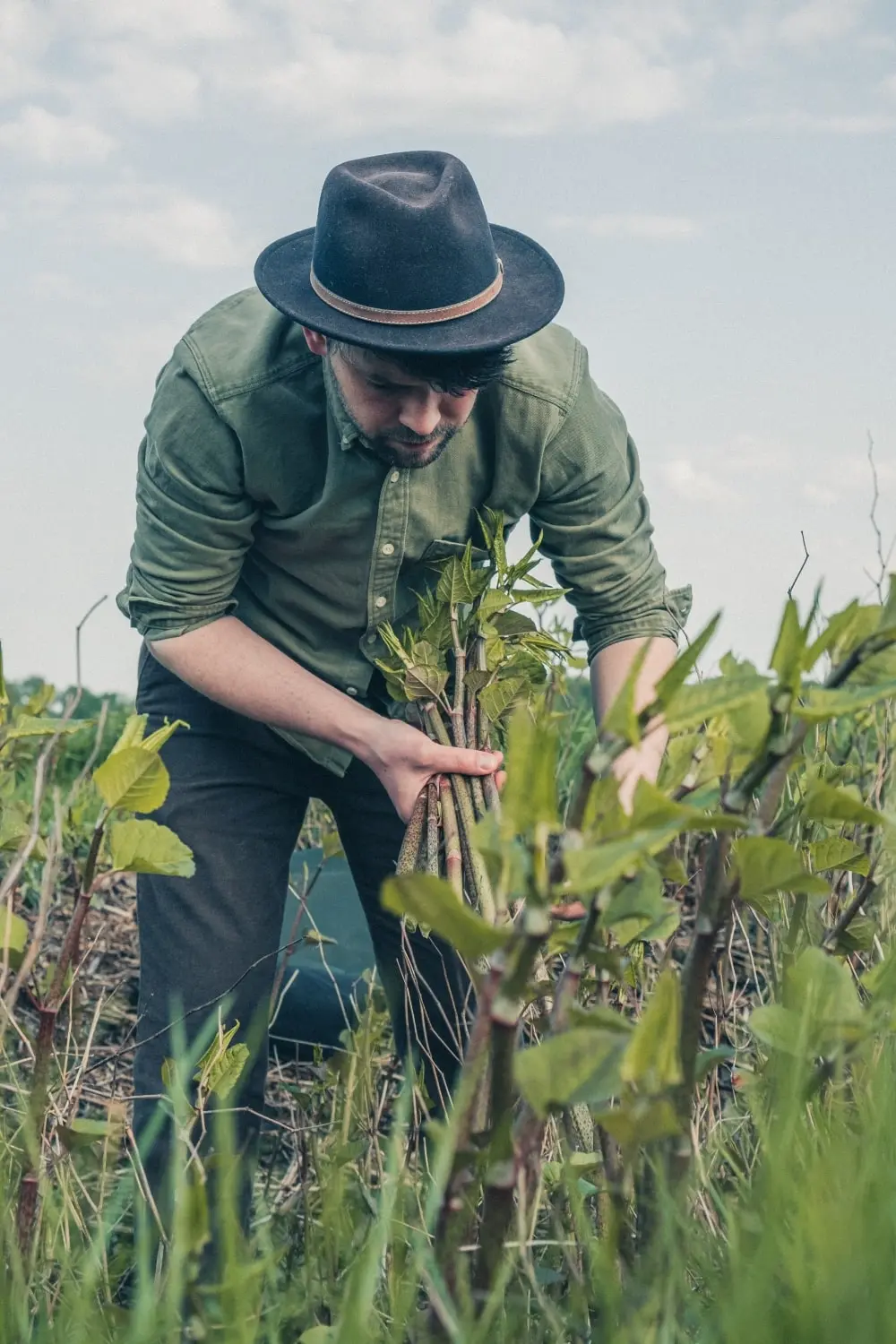
Once started in his mother's garage, after his time at 'De Librije', Sam has grown his business into an exceptional chocolate shop, located in the former primary school ’t Schienvat in the Drenthe village of Klijndijk.
His creations are closely intertwined with the nature in the area. The fruits, herbs, nuts, and spices that are used are carefully foraged from the immediate surroundings.
He works intensively with food forests, local growers, and engaged neighbours who share their fruit and nut trees with him.
Through this approach, Sam is completely guided by what the season has to offer — nature decides.